

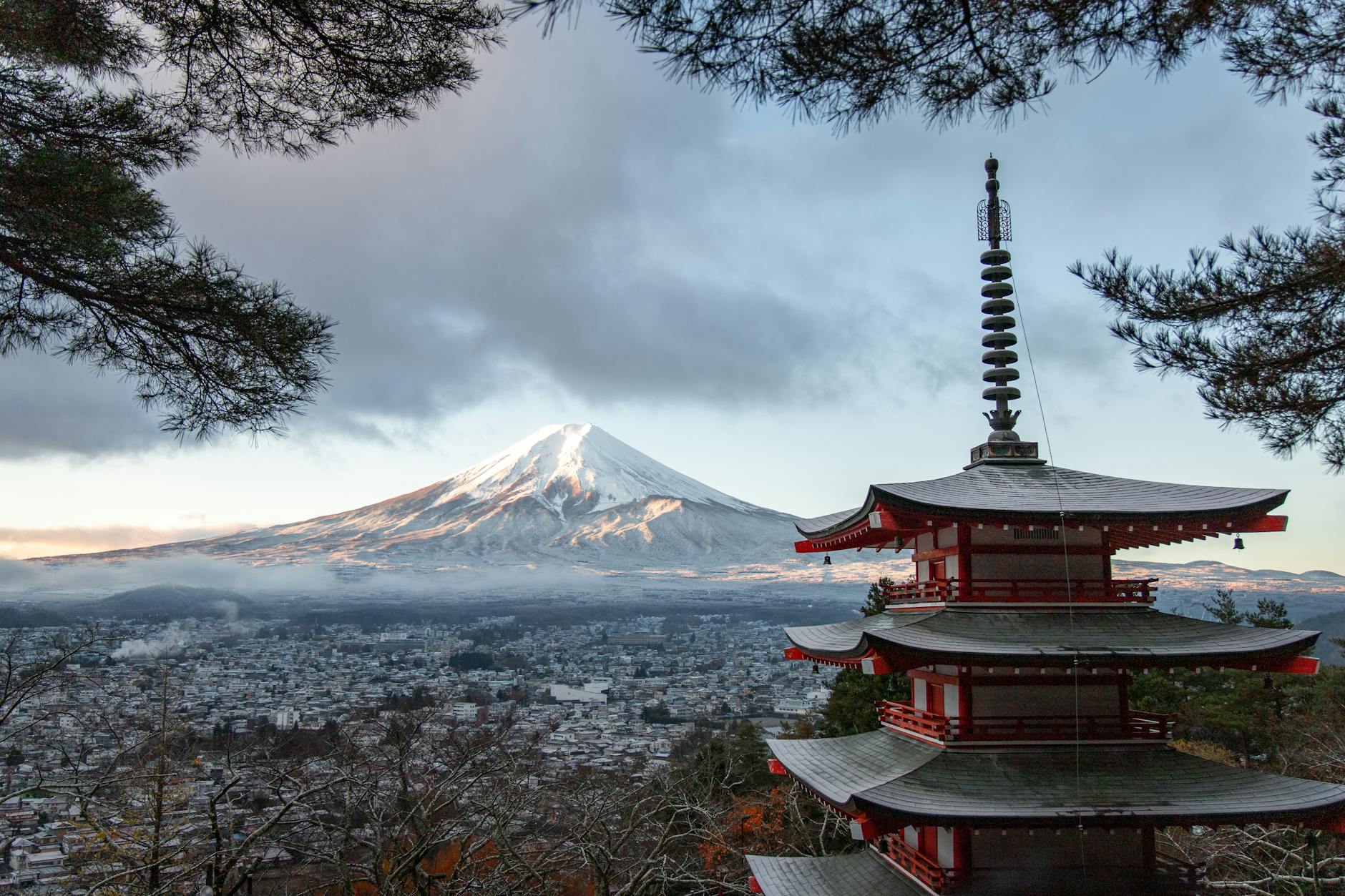
Planning a day trip to Mt. Fuji from Tokyo was one of our favorite parts about our last trip to Japan. This guide will walk you through the perfect itinerary, ensuring you make the most of your day. From the best route to take, to must-see spots like Chureito Pagoda and Lake Kawaguchi, we’ve got you covered!
Getting to Mt. Fuji from Tokyo
Self-Guided: An Optimized Route from Tokyo
By Train
To start your Mt. Fuji day trip, the most efficient route from Tokyo is via the JR Chuo Line. Here’s a step-by-step guide:
- Take the JR Chuo Line from Shinjuku Station to Otsuki Station. This takes about 1.5 hours.
- Transfer to the Fujikyu Railway at Otsuki Station, and take the train to Kawaguchiko Station. This takes about 55 minutes.
Tip: If you are planning on spending more than a day in Mt. Fuji or want to explore more places in the area, you might want to purchase the JR Tokyo Wide Pass. This covers your round trip from Tokyo and offers unlimited travel on JR lines within the Kanto region for three consecutive days.
By Bus
If you’re not a huge fan of the train, taking a direct bus from Tokyo to Mt. Fuji is another convenient option. You can take the Highway Bus from Shinjuku Expressway Bus Terminal. Here, you board a highway bus bound for Kawaguchiko Station or Fuji-Q Highland. This takes approximately 2 to 2.5 hours.
You can book your bus tickets online through websites like Highway-buses.jp or directly at the Shinjuku Expressway Bus Terminal.
Schedules and Prices: Bus schedules and prices can vary, so check the latest information on the official websites or apps. For detailed route information and booking, visit Fujikyu Bus.

Mt. Fuji Day Trip Tours
If you prefer a guided experience (like we do), there are a lot of options through Klook or Viator for day trips to Mt. Fuji from Tokyo. These tours usually include transportation, guided commentary, and visits to the most popular sites. Here are some recommended options:
- Mt Fuji Area Private Guided Tours in English (Viator)
- Mt. Fuji Private Tour with English Speaking Guide (Viator)
- Mt. Fuji and Hakone Private Tour with English Speaking Guide (Viator)
We love tours like this because it’s a stress-free way to explore a new place. You don’t have to think about the itinerary or how to get from A to B, you just show up!
Must-See Spots Around Mt. Fuji

1. Chureito Pagoda
You can’t visit Mt. Fuji without stopping by the Chureito Pagoda. This five-story pagoda gives you one of the most picture-perfect views of Mt. Fuji, especially during cherry blossom season. If you’re exploring on your own, just get to Kawaguchiko Station, hop on a bus to Shimo-Yoshida Station, and follow the signs to the pagoda.

2. Oishi Park
Oishi Park, found on the northern shore of Lake Kawaguchi, is a lovely place to unwind and soak in the breathtaking views of Mt. Fuji. The park is well-known for its seasonal flowers, especially the lavender fields that bloom in early summer. It’s the best spot for a leisurely walk or a picnic. You can even get Cremia ice cream here (if you know, you know), which is the perfect treat on a hot summer day.

3. Lake Kawaguchi
Lake Kawaguchi is the second largest of the Fuji Five Lakes and has plenty to offer. You can rent a boat, take a cruise, or just enjoy the beautiful scenery. For a unique view, check out the Mt. Kachi Kachi Ropeway, which gives you panoramic views of the lake and Mt. Fuji. Just get here early to avoid the long queues!

4. Oshino Village
Oshino Village, or Oshino Hakkai, is a charming little village with traditional thatched-roof houses and gorgeous spring water ponds. The crystal-clear ponds reflect Mt. Fuji, making for some stunning photos. It’s a great spot for photography lovers and anyone wanting to experience traditional Japanese culture.
Additional Suggestions
- Fuji-Q Highland: If you love thrill rides, you’ve got to check out Fuji-Q Highland. This amusement park has some of Japan’s most famous roller coasters, and the views of Mt. Fuji as you scream your way through the rides are unbeatable!
- Arakurayama Sengen Park: Beyond the Chureito Pagoda, Arakurayama Sengen Park itself is worth exploring. It has beautiful walking trails and offers panoramic views of Mt. Fuji. The park is especially gorgeous during cherry blossom season and when the autumn leaves are changing.
- Saiko Iyashi no Sato Nemba: Saiko Iyashi no Sato Nemba is a traditional Japanese village on the shores of Lake Saiko, one of the Fuji Five Lakes. Walking through the preserved thatched-roof houses, visiting the museums, and browsing the craft shops feels like stepping back in time. It’s a peaceful place to soak up Japanese culture and history.
Additional Tips for Your Mt. Fuji Day Trip
What to Expect from the Weather at Mt. Fuji
Mt. Fuji’s weather can be unpredictable, so it’s a good idea to check the forecast before you go. Most weather sites give you a pretty accurate 10-day forecast, so try to keep your days a little flexible if Mt. Fuji is at the top of your list. Generally, the best times to visit are late spring (May) and early autumn (September to October) when the skies are clear, and temperatures are on the mild side.
Sites to Track Weather and Livestream Views
Something we found particularly helpful (and actually pretty cool) were livestreams of Mt. Fuji. We had no idea these existed, but it’s a great way to see real-time weather and comparing it to the visibility index on fuji-san.info. Websites like Skyline Webcams offer live streaming views of Mt. Fuji, so you can check visibility before heading out, or have a better idea about what the levels of visibility really look like.

Food at Mt. Fuji
Don’t miss out on trying local specialties. The Mt. Fuji area is known for dishes like Hoto (a hearty noodle soup), Yoshida Udon, and fresh trout. Many of the tourist spots have restaurants and food stalls where you can enjoy these local flavors. We ate at Konami Boat, and we highly recommend it! They are cash only so just keep that in mind.
What to Bring to Mt. Fuji
- Comfortable Walking Shoes: Expect to do a fair amount of walking, especially if you’re visiting multiple sites. Comfy shoes are a non-negotiable!
- Layered Clothing: The weather can vary greatly, especially between Tokyo and Mt. Fuji. Dress in layers so you can adjust as needed throughout the day.
- Essentials: Don’t forget essentials like sunscreen, medicine, sunglasses, and a hat to protect yourself from the sun. A small backpack or tote bag is definitely a good idea.
- Camera: With so many beautiful sights, you’ll want to capture the memories. Make sure your camera or smartphone is fully charged, and consider bringing a portable charger.
A day trip to Mt. Fuji from Tokyo is a must-do for anyone visiting Japan. With this itinerary, you’ll experience the best views and attractions the area has to offer. Happy travels!
Affiliate Disclosure: Some of the links on this blog are affiliate links, meaning that if you click on the link and make a purchase, we may receive a commission. This commission is at no additional cost to you. We only recommend products that we have personally used and loved, and we only use affiliate links for products that we believe will be helpful to our readers!
