

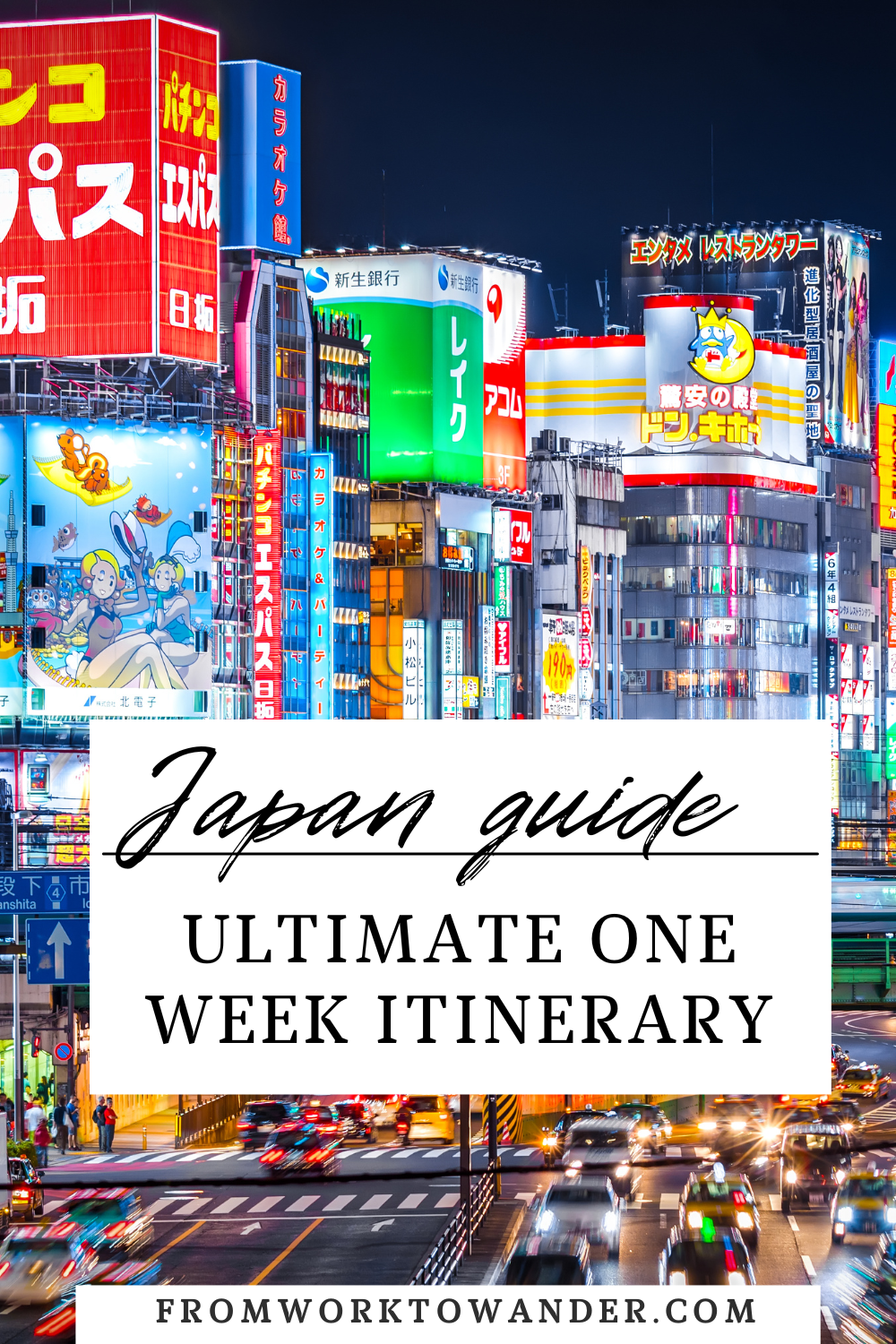
Planning a trip to Japan can be overwhelming, especially if it’s your first time visiting! You might be wondering, “Is a week worth visiting in Japan?” or even questioning, “Can you go to Japan in 7 days?” The answer is a resounding yes! With lots of planning and the right itinerary, you can experience the best of Japan in just one week. If you’re also unsure of what to pack, check out our blog post What to Pack for your First Trip to Japan!
Keep reading for our Japan in 7 Days guide.
Day 1-3: Tokyo
Day 1: Arrival

Arriving in Tokyo, we recommend scheduling a flight that lands in the evening to combat jet lag. After checking into your hotel, grab a quick snack from a local convenience store like 711 or Lawson’s. Afterwards, focus getting a good night’s rest because that’s what will help you adjust to the time difference and prepare for your next week of 20,000 steps and convenience store food.
Day 2: Shibuya, Harajuku & Asakusa


It’s your first full day in Japan! Start your day at the iconic Tsukiji Fish Market, a paradise for seafood lovers (and anyone who wants to try super fresh sushi!) While there’s a lot of mixed feedback on this market all over social media, it’s still one of our favorite places to explore and try some really yummy bites. Some of our favorite things to get here are:
- Wagyu on a stick
- Strawberry or muscat grape tanghulu
- Strawberry daifuku
- Grilled king crab
- Oyster
- Matcha from Matcha Stand Maruni
- Ice cream!!


Next, dive into the rich history of Tokyo at Sensoji Temple in Asakusa, the city’s oldest temple. Pass through the iconic Kaminarimon Gate, a symbol of Asakusa, and stroll down Nakamise Street, lined with traditional shops selling souvenirs and street food. They’ll have a wide variety of things to buy and eat, and we recommend taking some time here to really explore.

After immersing yourself in tradition, head to Harajuku, a district synonymous with youthful fashion and creativity. Takeshita Street, a narrow alley in Harajuku, is a hub of trendy boutiques, quirky cafes, and vibrant street art. We love to explore the diverse fashion styles from kawaii (cute) culture to gothic and punk influences. Don’t forget to indulge in Harajuku’s famed crepes, too! Warning, this street is PACKED with people no matter the time of day, and it seemed like it was usually full of tourists.

Once the day transitions into evening, venture to Shibuya, Tokyo’s bustling commercial and entertainment hub. Here you can experience the world-famous Shibuya Crossing, where a mesmerizing sea of pedestrians walk at every traffic signal change.
While in Shibuya, pay a visit to the loyal Hachiko, the faithful Akita dog, by visiting his statue near Shibuya Station—a heartwarming tribute to loyalty and devotion. If you’re a gaming enthusiast and have time, we recommend exploring the Nintendo Store located in Shibuya Parco.
Day 3: Shinjuku, Nakano & Akihabara
Another day of lots of walking! Prepare yourself for a day filled with the essence of Japanese pop culture, in Akihabara, the haven for anime and manga enthusiasts. Start off your dat at Animate, a multi-floor mega-store that houses everything from the latest manga releases to exclusive anime merchandise. Immerse yourself in the aisles of collectibles, figurines, and rare items that cater to fans of all genres. If you have time and are interested, there are a lot of maid cafes in the area too!

After satisfying your inner geek in Akihabara, venture to Omoide Yokocho in Shinjuku, a narrow alleys lined with micro-bars. Each bar in this unique area is small, hosting only a handful of patrons at a time, creating an intimate atmosphere to enjoy drinks and conversations. We don’t like to stop here to drink or eat anything, but it’s always fun to pass though and people watch.
If you decide to visit Shinjuku at night and are a fan of the bar scene, visit Golden Gai, a maze of alleys filled with a variety of micro-bars.

Next, set your sights on Nakano Broadway, a shopping complex in Nakano, where collectors and enthusiasts unite. Here, you’ll find a plethora of shops specializing in rare finds and vintage treasures. From vintage manga and anime cels to action figures and retro video games, Nakano Broadway is a paradise for collectors. This is one of the best places to buy souvenirs if you’re looking for things to bring back home to your loved ones.
🌸Unpopular take: A lot of others may recommend Disneyland or DisneySea, but in our opinion that’s not a place to go to if this is your first time in Japan. If you can incorporate it into your itinerary, and you don’t care for some of the other stuff, then go for it! We personally didn’t visit the theme park until our second visit since we were able to see everything else on our first trip here. Just our 2 cents! 🙂
Day 4: Hakone – Relaxation and Mt. Fuji

En route to Kyoto (bus or Shinkansen), take a detour to the picturesque town of Hakone, a serene oasis renowned for its hot springs and breathtaking views of the iconic Mount Fuji. Nestled amid lush greenery and rolling hills, Hakone is a haven of tranquility. Here, immerse yourself in the therapeutic embrace of an onsen, a traditional Japanese hot spring bath. Most hotels in the area will have an onsen, so make sure you triple check before you book your night in Hakone that yours does too!


For a bird’s-eye view of Hakone, hop on the Hakone Ropeway. As the cable car ascends, you’re treated to sweeping panoramas of Hakone’s verdant valleys, hot springs, and Lake Ashi’s glistening waters. In our opinion, this is one of the best places to get a great view of Mount Fuji!

If you have time, take a leisurely cruise across the tranquil waters of Lake Ashi.
Day 5-7: Kyoto & Nara – Where Nature and History Collide
Day 5: Kyoto


We recommend starting your day very early and visiting the Fushimi Inari Taisha. Take the stairs up the sacred Mount Inari through thousands of vibrant orange torii gates. This part of Kyoto gets very busy and populated fast, so if you want to make sure you beat the crowd try arriving just before sunrise.

Next, visit the Kinkaku-ji, the Golden Pavilion. Its upper two floors are adorned in glittering gold leaf and looks beautiful reflecting in the surrounding pond.

Afterwards, go to the Arashiyama Bamboo Grove. This surreal experience feels like stepping into another world, a tranquil sanctuary (outside of all of the tourists) in the midst of bustling Kyoto. If seeing the bamboo is a higher priority than Fushimi Inari, you can come here first thing in the morning instead! Typically anytime before or around 7AM is pretty empty.


Lastly, visit Gion, Kyoto’s historic district. Here, narrow cobblestone streets wind through ancient wooden machiya houses and are filled with little shops and restaurants. There’s a lot of shopping and eating to do when you’re in this area, so make sure you come with an empty stomach and light bags!
Day 6: Nara

Next, spend the day in Nara, Japan’s first capital. Here, friendly deer roam freely in Nara Park, adding a touch of nature to the city’s historic sites. Visit Todai-ji, housing a colossal Buddha statue, and explore the enchanting Kasuga Taisha Shrine.
Day 7: Kyoto & Back to the Airport
On your final day, soak in the last bits of Kyoto’s charm. Take the morning to visit a temple you missed or indulge in some local delicacies. We recommend going to a convenience store to pack up for your long airplane ride home.
Japan in 7 days might seem like a whirlwind, but it’s a testament to the country’s efficiency and the seamless integration of its modern and traditional aspects. From the bustling streets of Tokyo to the serene temples of Kyoto, and the natural beauty of Hakone, your first-time visit to Japan will be filled with unforgettable experiences.
We hope you loved this guide and it helps you plan your future Japan trip!
