

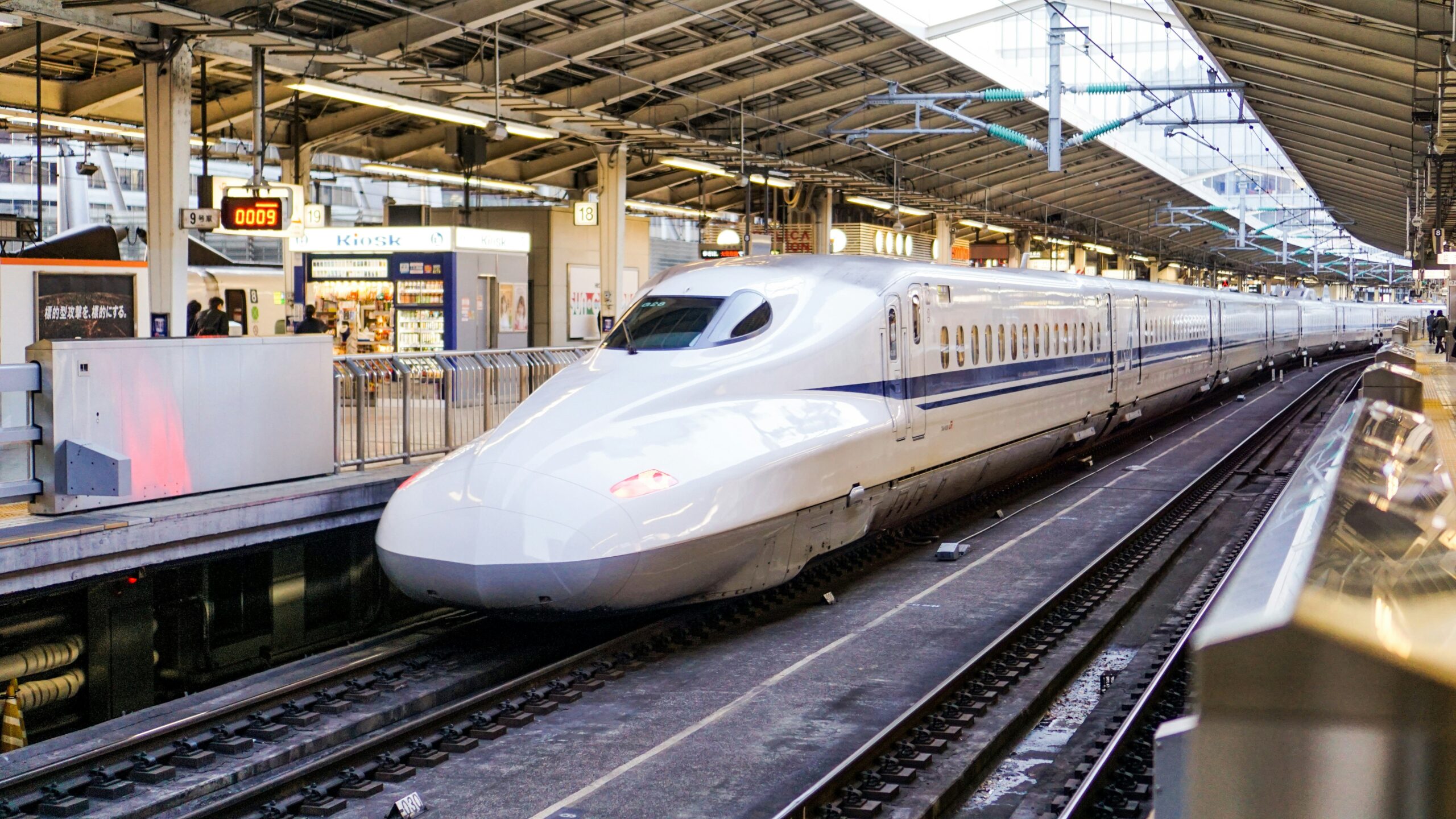
If you’re reading this then that means you’re deep into planning your upcoming trip to Japan (hopefully!) If you’re headed to Japan for the first time without any sort of guide, the bullet train (or Shinkansen) can be confusing and intimidating at first. Whether you’re going from Tokyo to Kyoto, Osaka, or literally anywhere else, here are 10 tips we wish we knew before we booked our first Shinkansen tickets to help you plan your trip to Japan:
1. You have to have an account to book any tickets online or the app

Usually when you’re booking transportation in the US you can ‘checkout’ as a guest without creating an account. However, when booking tickets for the bullet train you have to create an account before you can even open the app or look to book tickets online. During this process, you have to enter your credit card information ahead of time to be verified.
This is important because you can not change the method of payment when going through the checkout process. It will automatically use whatever card you’ve chosen for your account.
2. Booking through their app, SmartEx App, is easiest

In our opinion, the user experience booking through the app vs their website is night and day. Their app is very easy to use, and you can open it easily to look at your reservation if you have to make any changes leading up to your trip. The app is available in both the Apple and Google Play stores here.
3. There are some Shinkansen trains that are faster than others
Not all Shinkansen are created equal. There are three types: Nozomi, Hikari, and Kodama. Nozomi is the fastest, followed by Hikari and Kodama. Nozomi makes fewer stops, making it ideal for longer distances. Hikari strikes a balance between speed and affordability, while Kodama is the slowest and cheapest, stopping at most stations.
Make sure you pay attention to the type of bullet train you’re booking depending on budget/timing of when you want to arrive to your destination.
4. You can take oversized baggage on if you reserve specific seats

While we personally do not recommend taking a ton of luggage on the Shinkansen, they do allow it. For larger luggage (specifically dimensions of 160cm or more and 250cm or less), you need to make a reservation for the “seats with oversized baggage area” or “seats with an oversized baggage compartment.” If you don’t you will likely be charged a fee.
5. Your carry-on luggage will fit overhead
For smaller items, like a carry-on, there are overhead compartments above each seat. Otherwise, there’s a lot of space in the seats themselves if you’d rather put your bag on your lap or on the ground near your feet.
6. You don’t have to reserve a seat, but we highly recommend you do
Technically unreserved seating is available on some trains, but be prepared to queue for seats. Reserved seating offers peace of mind, especially with luggage, and you won’t have to worry about trying to find seats together with the rest of your party.
Ordinary cars offer comfortable seating, while Green Cars (First Class) have more legroom and plushier seats. In all honesty, the ordinary cars have more than enough room to have a comfortable ride wherever you’re going.
7. Purchase an ekiben before you board because sometimes they won’t sell them on the train


While definitely not required, we love purchasing an Ekiben (a type of bento boxed lunch that is designed for eating on trains or at train stations) before we board the Shinkansen. For longer rides, they usually sell them on the train. But on our recent trip from Tokyo to Osaka (2ish hours) they didn’t sell them on board.
Because of this, we recommend purchasing them while you’re at the station. They’re perfect for a quick and tasty onboard meal.
8. The train will always leave on time
If you’re one to arrive right on time, then the Shinkansen will definitely leave without you. These bullet trains are known for their precision, so punctuality is key! We recommend arriving at the station early enough to locate the platform and familiarize yourself with signage to ensure a stress-free boarding experience.
The train typically arrives 5-7 minutes (in our experience) prior to the time it’s supposed to depart the station. Don’t be late!
9. If your ticket is a QR code, leaving the station can be tricky
Once you have purchased your tickets, you have an option to choose a QR code as the form of ticket you’ll use to board the train. Entering the station is easy because all you have to do is scan the QR code. However, we experienced issues when exiting the station.
It seems like the machines aren’t yet optimized to recognize the QR code when exiting, so we had to ask for assistance from the train employees to exit the station both times when we took the Shinkansen. All you have to do is show them the code, and they’ll grab this device, put it on top of where you would normally tap your IC card, and then you’re free to exit.
10. Seeing Mt. Fuji is possible


If riding the Shinkansen is your only opportunity to see Mt. Fuji on your trip, we highly recommend booking the right seats to make sure you get the chance at a glimpse. Based on where you’re going, this is where you have to sit:
- When traveling from Tokyo to Osaka, sit on the right side of the bullet train, or seats D/E
- When traveling from Osaka to Tokyo, sit on the left side of the bullet train, or seats A/B
If you’re traveling during the summer, there’s a good chance it’ll be clear enough to catch Mt. Fuji from your window!
We hope this guide was helpful as you take another step in planning your dream trip to Japan! For some other ideas and help on planning, check out our other blog posts:
Happy travels!
